
- E-mail : info@wellonapharma.com
- Call : +91-261-2571244
- Mob: +91-7490041245

Allergy medicines are an important part of the pharmaceutical formulations market, supporting demand from pharmacies, healthcare distributors, importers and pharmaceutical brands. For businesses sourcing liquid antihistamine products, choosing a dependable Allergy Syrup Manufacturer involves evaluating product availability, formulation requirements, quality systems, packaging, regulatory documentation and supply capabilities.
Allergy syrups and drops are designed for specific product presentations and patient needs. Depending on the manufacturer's portfolio and the regulations of the destination market, this category may include cetirizine, levocetirizine, loratadine and fexofenadine formulations. However, the availability of a particular ingredient in syrup or drop form, its strength and its approved uses must be confirmed for each product.
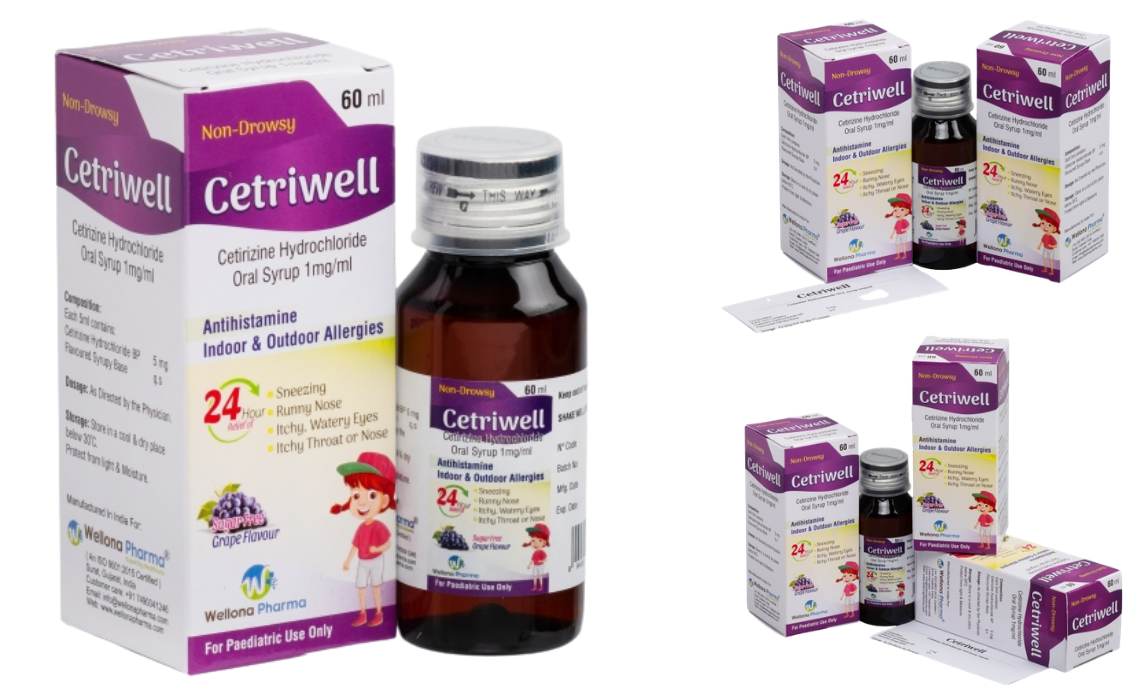
For pharmaceutical importers, wholesalers, distributors and brand owners, a suitable manufacturing partner can help simplify sourcing and support long-term product planning. Wellona Pharma, based in Surat, Gujarat, India, offers pharmaceutical formulations across multiple dosage forms. Businesses can explore its syrup category and drop category to begin evaluating the available product range.
Allergies occur when the immune system reacts to a substance that it identifies as a trigger. Depending on the individual and the allergen, symptoms may include sneezing, a runny nose, itching, watery eyes or skin reactions. Antihistamines are among the medicines used to manage certain allergy symptoms, although the appropriate treatment depends on the condition, patient and product.
Liquid formulations can be relevant to pharmaceutical portfolios serving patients who require or prefer a liquid presentation. Syrups and oral drops may differ in concentration, dosing instructions, packaging and intended patient groups. These dosage forms should not be treated as interchangeable simply because they contain the same active ingredient.
For B2B buyers, understanding the differences between formulations is an important first step. A procurement team should verify the active ingredient, strength, dosage form, approved indications, pack size, storage instructions and market authorization before adding a product to its sourcing plan.
Cetirizine is a second-generation antihistamine used to manage certain allergy symptoms. Depending on the approved product, it may be indicated for conditions involving symptoms such as sneezing, nasal discharge, itching or urticaria.
For pharmaceutical buyers, cetirizine liquid formulations may be relevant when building an antihistamine portfolio for a particular market. However, the availability of a syrup or drop presentation, the approved concentration and the permitted patient age groups should be confirmed directly with the supplier.
Procurement teams should also check the product's labeling, storage requirements, packaging configuration and supporting quality documentation. These details help ensure that the selected formulation aligns with the intended distribution market.
Levocetirizine is an antihistamine used for selected allergic conditions. Although it is related to cetirizine, the two should not be considered identical products for procurement, labeling or dosing purposes. Their approved product information and strengths must be assessed separately.
When sourcing levocetirizine formulations, buyers should specify the required dosage form and concentration rather than requesting only the ingredient name. They should also verify the product's approved indications, age-related restrictions, packaging and documentation requirements.
For international distribution, it is particularly important to establish whether the proposed presentation meets the regulatory requirements of the destination country before confirming a commercial order.
Loratadine is another second-generation antihistamine used to relieve certain allergy symptoms. Its product indications and directions for use depend on the specific formulation and the approved labeling in the relevant market.
Pharmaceutical companies evaluating loratadine liquids should confirm the active ingredient concentration, available pack sizes and current product availability. Buyers should also check labeling requirements, product specifications and documentation needed for importation or local distribution.
Because liquid presentations can differ between markets, a supplier's general antihistamine range should not be treated as confirmation that every requested loratadine syrup or drop is available.
Fexofenadine is an antihistamine used for certain allergic conditions. Its suitability depends on the patient's circumstances and the approved product information. The available dosage forms and strengths may vary by country.
For B2B sourcing, the main considerations include the required formulation, strength, packaging, stability information and destination-market authorization. Buyers should also verify the product's storage conditions and any specific handling requirements before planning distribution.
These four ingredients represent relevant antihistamine categories for portfolio planning. They do not establish that every ingredient is currently available from a particular manufacturer in both syrup and drop forms. Product-specific confirmation is essential before a purchase commitment is made.
A suitable supplier should be able to clarify which allergy formulations are available and whether the requested dosage form, strength and packaging can be supplied. Buyers should provide a clear product brief that identifies the ingredient, concentration, pack size, estimated order quantity and destination market.
They should also discuss minimum order quantities, expected production timelines, order confirmation procedures and any limitations affecting the requested formulation. Clear communication at this stage can reduce delays and prevent misunderstandings during procurement.
Wellona Pharma provides information about its pharmaceutical services through its third-party manufacturing page. Prospective customers can review the service information and contact the company to discuss their specific allergy syrup or drop requirements.
Quality assurance and quality control are essential when sourcing liquid pharmaceutical products. Buyers should understand how the manufacturer manages incoming materials, production processes, in-process checks, finished-product testing, batch documentation and product release.
Depending on the formulation and applicable standards, quality considerations may include ingredient identity, concentration, pH, appearance, microbial quality, packaging integrity and stability. The relevant specifications and acceptance criteria must be established for the particular product rather than assumed to be identical across all liquids.
Pharmaceutical buyers should request the documentation appropriate to the product and market. They should also independently verify relevant manufacturing licences, certifications and product approvals. General company information should not replace product-specific due diligence.
For further information about the company's stated quality approach, visit the quality control and quality assurance page.
Packaging plays an important role in protecting a liquid formulation during storage, transportation and distribution. Buyers should confirm the approved container, closure system, pack size and any supplied measuring device. The selected packaging must be compatible with the formulation and suitable for the intended market.
Labels should accurately communicate the product name, active ingredient, strength, instructions, warnings, storage conditions, batch information and expiry details as required by local regulations. For products intended for children, age restrictions and dosing instructions require particular attention.
Importers should also review language requirements, local labeling rules and any country-specific packaging conditions before approving artwork or placing an order.
Pharmaceutical regulations differ across countries. A formulation that is available in one market may require separate registration, labeling changes or additional documentation before it can be marketed elsewhere.
Depending on the product and destination, buyers may need product specifications, certificates of analysis, stability information, manufacturing documentation and other records required by regulators or customer quality agreements. The exact requirements should be confirmed before the supply arrangement is finalized.
Importers and brand owners should also clarify responsibility for registration, local representation, import permissions and ongoing regulatory compliance. A supplier's ability to manufacture a formulation does not automatically mean that the product is approved for sale in every country.
Third-party manufacturing can help pharmaceutical companies source formulations without building every manufacturing capability in-house. It may be relevant to distributors expanding their product portfolios, established brands seeking additional sourcing options and businesses evaluating new liquid formulations.
Before entering into an arrangement, both parties should agree on the product specification, approved composition, packaging, documentation, quality responsibilities, order quantities, production schedule and commercial terms. Any proposed customization should be evaluated for manufacturing feasibility and regulatory compliance.
Buyers should also clarify how product changes, packaging revisions, quality complaints and supply interruptions will be handled. Written agreements and clearly defined responsibilities help establish a more structured business relationship.
Companies interested in this model can review Wellona Pharma's third-party manufacturing services and share their requirements for assessment. Specific product availability, manufacturing arrangements and applicable conditions should be confirmed directly with the company.
Responsible marketing is important for allergy medicines because symptoms can have different causes and not every patient requires the same treatment. Product descriptions should accurately reflect approved indications, active ingredients, age restrictions and warnings. Promotional materials should not imply that a particular antihistamine is suitable for every allergy or patient.
Antihistamines can also differ in their potential side effects and precautions. Some products may cause drowsiness, while others are generally considered less sedating when used as directed. The effects depend on the active ingredient and the individual. Buyers and distributors should therefore rely on approved product information rather than making broad claims about all antihistamines.
The UK National Health Service's guide to antihistamines provides general information about their uses, types and potential side effects. Pharmaceutical businesses should ensure that product-specific claims and instructions follow the relevant approved labeling and local regulatory requirements.
A structured sourcing process begins with a clear enquiry. Specify the ingredient, required dosage form, strength, pack size, destination country, estimated volume and preferred delivery schedule. Include any known registration, labeling or documentation requirements so that the supplier can assess the request accurately.
Next, review the proposed product specifications, quality documentation, packaging details and applicable regulatory conditions. Confirm current availability and lead times before committing to a purchasing schedule. If multiple products are involved, a consolidated requirement list can make product comparisons and order planning easier.
Finally, evaluate the complete supply arrangement rather than price alone. Documentation, product suitability, quality systems, communication, delivery commitments and regulatory readiness all influence the overall value of a pharmaceutical sourcing relationship.
An allergy syrup manufacturer produces liquid formulations intended for specified allergy-related uses. Depending on its portfolio, these may include antihistamine formulations. Buyers should confirm the exact ingredients, dosage forms and available strengths directly with the manufacturer.
Cetirizine, levocetirizine, loratadine and fexofenadine are relevant antihistamine ingredients to consider. Availability in syrup or drop form varies by manufacturer and market, so each requested presentation should be verified.
Review the active ingredient, concentration, approved indications, pack size, quality documentation, storage conditions, labeling and destination-market registration requirements. Confirm product availability and commercial terms before placing an order.
Yes. Businesses can share their required formulation, strength, packaging, target market and estimated quantity to discuss manufacturing feasibility and available arrangements with a prospective partner.
Product-specific documentation helps buyers assess quality, traceability, stability and compliance with applicable requirements. The required documents vary according to the formulation, destination market and customer agreement.
No. Syrups and drops may have different concentrations, dosing instructions and approved presentations. Products should be used according to their own approved labeling and healthcare professional guidance.
For pharmaceutical importers, distributors, wholesalers and brand owners, selecting a suitable allergy syrup manufacturer requires careful consideration of formulation availability, quality documentation, packaging and destination-market requirements.
Wellona Pharma is based in Surat, Gujarat, India, and offers pharmaceutical formulations across multiple dosage forms. Businesses can explore the syrup category, review the drop category and contact the company to discuss specific antihistamine product requirements.
Looking for an allergy syrup or drops manufacturing and supply partner? Visit the Wellona Pharma contact page to submit your enquiry. Include the required ingredient, dosage form, strength, pack size, destination country and estimated quantity so that your requirements can be reviewed and current availability confirmed.