
- E-mail : info@wellonapharma.com
- Call : +91-261-2571244
- Mob: +91-7490041245

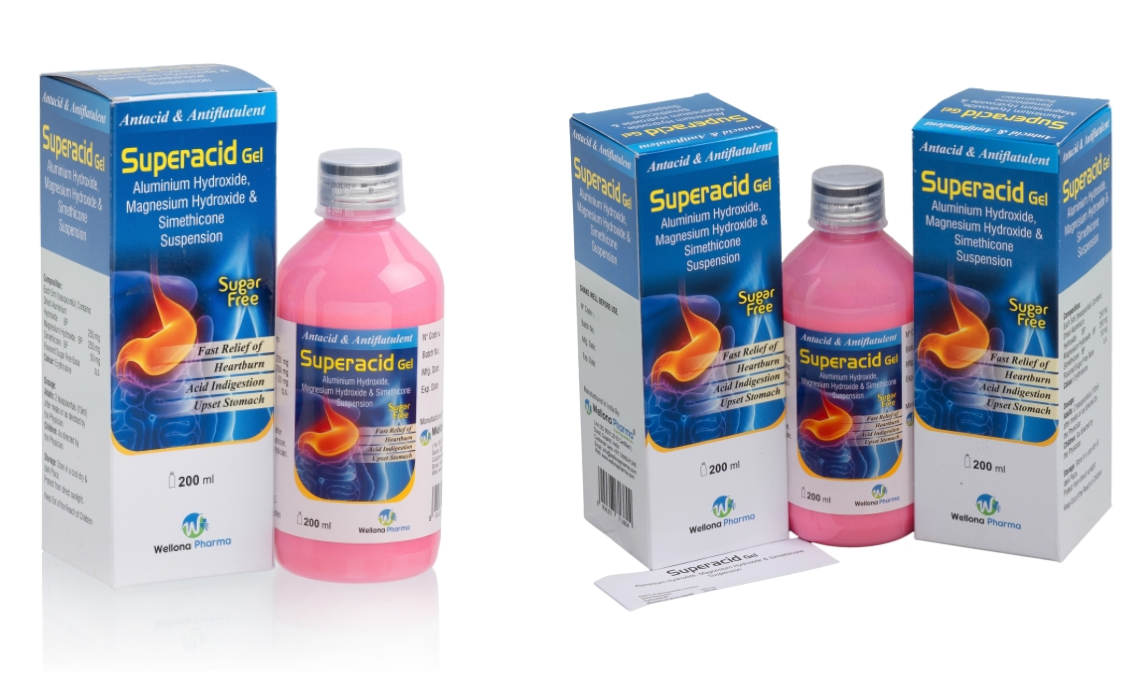
Gastrointestinal medicines are an important segment of the pharmaceutical formulations market, serving demand from pharmacies, healthcare distributors, importers and pharmaceutical brands. For businesses sourcing liquid formulations, selecting a reliable Antacid Suspension Manufacturer involves evaluating product availability, formulation specifications, quality systems, packaging, documentation and bulk supply capabilities.
Antacid and gastrointestinal suspensions cover different therapeutic categories. Depending on the product portfolio and applicable market approvals, these may include aluminium hydroxide antacid formulations, sucralfate suspensions and lactulose solutions or liquid formulations. Although these products may all be supplied in liquid form, they have different ingredients, purposes and product requirements. Buyers should assess each formulation individually rather than treating them as interchangeable.
For pharmaceutical importers, wholesalers, distributors and brand owners, a structured sourcing process can help establish a dependable supply arrangement. Wellona Pharma, based in Surat, Gujarat, India, offers pharmaceutical formulations across multiple dosage forms. Businesses can explore its syrup category and contact the company to confirm the availability and specifications of relevant gastrointestinal products.
Oral suspensions are liquid dosage forms in which active ingredients are dispersed throughout a liquid medium. Some gastrointestinal medicines are supplied as suspensions, while others are formulated as solutions or in different dosage forms. The exact presentation depends on the active ingredient, formulation design and approved product information.
Antacids generally work by neutralising stomach acid and may provide relief from selected symptoms associated with acidity or indigestion. Other gastrointestinal medicines have different purposes. Sucralfate, for example, is used in the management of certain gastrointestinal ulcers, while lactulose is an osmotic laxative commonly used to treat constipation and, under medical supervision, certain other conditions.
For B2B buyers, these distinctions matter when selecting products for a pharmaceutical portfolio. Each medicine has specific storage requirements, labeling considerations, approved indications and regulatory obligations. Product availability and approved uses should always be confirmed for the intended market.
Aluminium hydroxide is an ingredient used in antacid formulations. It helps neutralise stomach acid and may be included in products intended to relieve certain symptoms associated with excess acidity. Depending on the formulation, it may also be combined with other ingredients to meet specific product requirements.
Pharmaceutical companies sourcing aluminium hydroxide suspensions should verify the exact composition, strength, pack size and approved indications. Where combination products are involved, buyers should review every active ingredient and its concentration rather than relying on the product's general category or marketing description.
Quality considerations may include ingredient identity, finished-product specifications, physical stability, packaging compatibility and appropriate storage conditions. Buyers should also confirm the product's approved labeling and any warnings relevant to its intended market.
Aluminium-containing medicines may not be suitable for everyone, particularly some people with impaired kidney function. Product information and healthcare professional guidance should determine their appropriate use. For general background, buyers can consult the MedlinePlus information on antacids.
Sucralfate is a gastrointestinal medicine used in the management of certain ulcers. It works locally in the gastrointestinal tract by forming a protective barrier over affected areas. It is different from a conventional antacid, even though both categories may be considered within a broader gastrointestinal product portfolio.
For pharmaceutical buyers, sourcing sucralfate suspension requires attention to the approved strength, composition, packaging, product specifications and directions for use. Buyers should also verify the stability information and storage conditions relevant to the particular formulation.
Documentation should support the product's identity, quality and compliance with applicable requirements. Where the medicine is intended for a specific export market, importers should confirm that the product and its labeling meet local regulations before placing a commercial order.
Because sucralfate can affect the absorption of certain other medicines, its administration instructions should be followed according to approved product information and professional advice. Pharmaceutical marketing materials should accurately communicate the product's authorized purpose without suggesting that it is interchangeable with an antacid.
Lactulose is an osmotic laxative used to treat constipation. It draws water into the bowel, helping soften stools and support bowel movements. In certain clinical circumstances, it may also be prescribed for the management of hepatic encephalopathy under appropriate medical supervision.
Although lactulose is commonly supplied as an oral liquid, its formulation may be described as a solution rather than a suspension. This distinction matters for accurate product classification, procurement specifications and product documentation.
Buyers should confirm the concentration, pack size, labeling, storage conditions and approved indications of the required lactulose product. They should also check the applicable quality specifications and destination-market registration requirements.
Lactulose may cause gastrointestinal effects such as bloating, gas or diarrhoea, particularly when used inappropriately. Product claims and directions should follow approved labeling. General information about this medicine is available from the MedlinePlus lactulose medicine guide.
The first step in evaluating a supplier is to confirm whether it can provide the required formulation and presentation. Buyers should share the active ingredient, strength, dosage form, pack size, expected quantity and destination market. They should also clarify minimum order quantities, estimated production lead times and the process for confirming an order.
Product categories can help identify areas of interest, but they do not establish that every ingredient or formulation is currently available. Buyers should request an updated product list and verify the exact specifications before committing to a purchase.
Businesses considering external manufacturing support can review Wellona Pharma's contract manufacturing services and discuss the feasibility of their specific requirements directly with the company.
Quality management is central to pharmaceutical sourcing. Buyers should understand how a manufacturer manages incoming materials, production operations, in-process controls, finished-product testing, batch documentation and product release.
Depending on the formulation and applicable standards, relevant quality parameters may include ingredient identity, strength, appearance, pH, microbial quality, physical stability and packaging integrity. The applicable testing programme and acceptance criteria should be established for the specific product rather than assumed to be the same across all gastrointestinal liquids.
For suspensions, the formulation's physical characteristics and instructions for use are particularly important. Product specifications should address relevant stability characteristics and any required shaking or handling instructions. For solutions such as lactulose, the relevant quality controls should reflect the nature of the formulation.
Buyers should verify the applicable manufacturing licences, certifications and product approvals independently. They can also review Wellona Pharma's stated approach through its quality control and quality assurance page.
Suitable packaging helps protect a gastrointestinal liquid during storage, transportation and distribution. Buyers should confirm the approved container, closure system, pack size and any supplied measuring device. The packaging must be compatible with the formulation and comply with the requirements of the destination market.
Labels should accurately identify the product, active ingredients, strength, directions, warnings, storage conditions, batch details and expiry information as required by local regulations. Buyers should review the proposed artwork and language requirements before approving packaging for production.
Product documentation may include specifications, certificates of analysis, stability information, batch records and other records required by regulators or customer quality agreements. The exact documentation package depends on the formulation, jurisdiction and commercial arrangement.
Bulk pharmaceutical sourcing requires planning beyond the initial quotation. Buyers should consider forecast demand, order quantities, production timelines, storage capacity and distribution requirements. Clear communication about these factors can help both parties establish realistic supply schedules.
Third-party manufacturing may offer a practical sourcing option for pharmaceutical brands and distributors that want to expand their portfolios without establishing every manufacturing capability internally. Depending on the agreed scope, the arrangement may cover production of specified formulations, packaging coordination and related documentation.
Before finalising an agreement, buyers should confirm the product specification, approved composition, packaging, quality responsibilities, documentation, order quantities and delivery expectations. They should also clarify how changes to the formulation or packaging will be reviewed and approved.
Companies exploring this approach can review Wellona Pharma's third-party manufacturing services. Product availability, manufacturing feasibility, minimum order quantities and commercial terms should be confirmed directly with the company.
Pharmaceutical products must meet the regulatory requirements of their intended markets. A product that is available in one country may require separate registration, additional documentation or changes to labeling before it can be marketed elsewhere.
Importers should identify the applicable registration pathway, product authorization requirements, local labeling rules and import permissions before confirming an order. They should also establish which party will manage registration, local representation and ongoing regulatory compliance.
Supply planning should account for the product's approved storage conditions, shelf life, packaging and transportation requirements. Documentation and responsibilities should be agreed upon before dispatch to reduce avoidable delays during importation or distribution.
For businesses evaluating an export-oriented sourcing relationship, the most useful starting point is a clear product brief containing the required formulation, strength, pack size, target country and expected order volume. This allows a potential supplier to assess the request against its actual capabilities.
A reliable sourcing process begins with clearly defining the product requirement. Identify whether the need is for an antacid containing aluminium hydroxide, a sucralfate formulation, a lactulose liquid or another gastrointestinal medicine. These products serve different purposes and should be evaluated separately.
Next, review the supplier's manufacturing capabilities, product specifications, quality documentation, packaging options and regulatory readiness. Confirm availability and production timelines before making commitments. Where multiple products are involved, a consolidated product list can help procurement teams compare options consistently.
Price remains an important consideration, but it should not be the only deciding factor. Documentation, product suitability, quality systems, communication, supply reliability and compliance can all influence the overall value of a pharmaceutical sourcing relationship.
An antacid suspension manufacturer produces liquid formulations designed to neutralise stomach acid. Depending on the product portfolio, the range may include aluminium hydroxide formulations and certain combinations. Buyers should confirm current availability and approved product specifications directly with the manufacturer.
No. Aluminium hydroxide is used in antacid formulations, sucralfate is used in the management of certain ulcers, and lactulose is an osmotic laxative. Their purposes, product specifications and precautions differ.
Confirm the formulation, strength, dosage form, pack size, quantity, product documentation, storage requirements, destination-market authorization and delivery schedule. Minimum order quantities and commercial terms should also be agreed upon in advance.
Yes. Businesses can share their required formulation, specifications, packaging, target market and estimated quantity to discuss manufacturing feasibility and potential supply arrangements with a prospective partner.
Quality documentation supports product verification, batch traceability and assessment against established specifications. The required records depend on the formulation, destination market and applicable regulatory or customer requirements.
Not necessarily. Product registration, labeling, packaging and import requirements vary by country. Buyers should confirm the product's authorization and applicable compliance requirements before arranging a shipment.
For pharmaceutical importers, wholesalers, distributors and brand owners, selecting an antacid suspension manufacturer requires careful evaluation of product availability, quality systems, documentation, packaging and bulk supply requirements.
Wellona Pharma is based in Surat, Gujarat, India, and offers pharmaceutical formulations across multiple dosage forms. Businesses can explore the syrup category and review the company's manufacturing services before contacting the team about specific gastrointestinal products.
Looking for a gastrointestinal suspension manufacturing or bulk supply partner? Visit the Wellona Pharma contact page to submit your enquiry. Include the required ingredient, strength, dosage form, pack size, destination country and estimated quantity so the team can review your requirements and confirm the available options.