
- E-mail : info@wellonapharma.com
- Call : +91-261-2571244
- Mob: +91-7490041245

Malaria remains an important healthcare concern in many parts of the world, creating an ongoing need for reliable pharmaceutical products and dependable medicine supply chains. In situations where injectable treatment is clinically appropriate, hospitals and healthcare providers require pharmaceutical products manufactured under controlled quality systems and supplied with appropriate documentation.
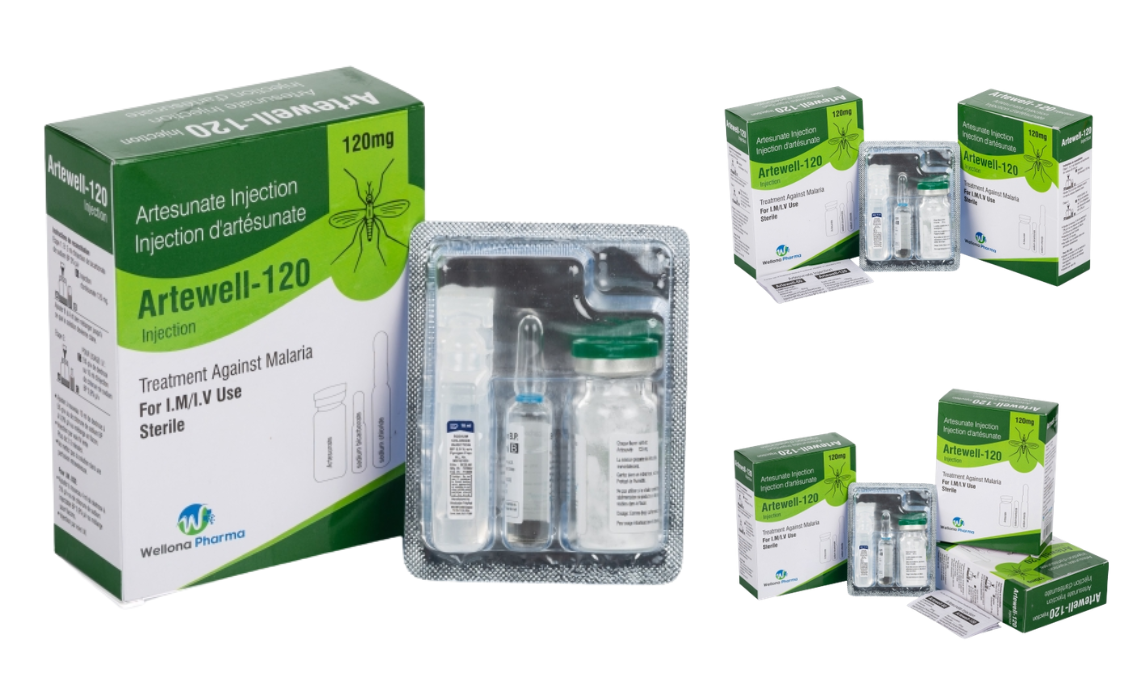
For pharmaceutical companies, distributors, hospitals, and international buyers, selecting a dependable antimalarial injections manufacturer in India involves evaluating manufacturing capabilities, quality control, product specifications, packaging, regulatory requirements, and supply capacity. Wellona Pharma provides pharmaceutical manufacturing and sourcing solutions for customers looking to develop or expand their finished pharmaceutical portfolios.
Buyers interested in broader antimalarial pharmaceutical products can explore the antimalarial medicine category to understand the available pharmaceutical sourcing options.
Malaria treatment requirements can vary according to the patient's condition, parasite species, disease severity, geographical region, resistance patterns, and applicable clinical guidelines. In certain healthcare settings, injectable antimalarial formulations may form part of the available treatment options under professional medical supervision.
For hospitals and pharmaceutical distributors, dependable product availability is therefore an important supply-chain consideration. A reliable manufacturer can help buyers plan procurement based on approved formulations, required strengths, packaging configurations, market registrations, and expected demand.
However, pharmaceutical sourcing should always be based on regulatory and medical requirements. Manufacturers and distributors should not position injectable antimalarial medicines as universally appropriate for every malaria case. Treatment decisions must remain with qualified healthcare professionals and follow applicable clinical guidance.
The antimalarial injectable segment includes different formulations and active ingredients depending on the manufacturer's portfolio and the regulatory requirements of the intended market. Products may be developed for specific clinical applications and supplied in different strengths or presentations.
One important category includes injectable artesunate formulations. Artesunate injections are used in appropriate clinical settings according to established treatment guidelines. Other injectable antimalarial products may also be available depending on regional approvals and manufacturer portfolios.
Wellona Pharma's pharmaceutical sourcing capabilities can support companies looking for antimalarial products and other finished formulations. Buyers should confirm the current product range, strengths, pack sizes, documentation, and regulatory status before placing an order.
Quality assurance is especially important for injectable medicines because the finished product is administered through an injectable route. Manufacturers need controlled processes covering raw materials, formulation, filling, sealing, inspection, testing, packaging, and storage.
A professional antimalarial injections manufacturer should operate with documented pharmaceutical quality procedures appropriate to the products being manufactured. Manufacturing controls help maintain consistency between batches and provide traceability throughout production.
The World Health Organization Good Manufacturing Practices guidance provides an important reference for pharmaceutical manufacturing and quality assurance principles.
In addition to general manufacturing standards, products must comply with the regulatory requirements applicable to their intended market. Export buyers should therefore evaluate both manufacturing quality and destination-country registration requirements.
The quality of an injectable antimalarial product starts with the materials used during manufacturing. Pharmaceutical manufacturers need suitable raw materials and excipients that comply with defined specifications and applicable quality requirements.
Incoming materials may be subject to identification, sampling, testing, and release procedures before being used in production. Controlled dispensing and formulation processes then help ensure that the intended composition and concentration are maintained.
Manufacturing records provide traceability throughout the production process. This documentation can be important for batch review, quality assurance, regulatory submissions, and customer requirements.
For pharmaceutical buyers, it is useful to evaluate a supplier's approach to raw-material qualification, manufacturing controls, batch documentation, and finished-product testing before entering into a long-term supply agreement.
The manufacturing process depends on the individual formulation. Injectable pharmaceutical production may involve controlled preparation, filtration or other suitable processing steps, filling into approved containers, sealing, inspection, and finished-product testing.
For sterile products, environmental and process controls are essential. Manufacturing facilities need appropriate procedures for maintaining controlled conditions and minimizing the possibility of contamination during production.
Lyophilized injectable products may involve additional manufacturing stages compared with ready-to-use liquid injections. The final process depends on the formulation, stability characteristics, approved manufacturing method, and regulatory specifications of the individual product.
For companies sourcing multiple injectable categories, working with an established injectable pharmaceutical manufacturer can help simplify supplier evaluation and procurement coordination.
Quality control is a critical component of antimalarial injection manufacturing. Manufacturers should maintain procedures for evaluating raw materials, in-process materials, packaging components, and finished products according to established specifications.
Depending on the product, relevant quality attributes may include identification, assay, appearance, pH, sterility, particulate matter, moisture content, reconstitution characteristics, and other formulation-specific parameters.
The exact tests and acceptance criteria depend on the product specification, pharmacopoeial standards, regulatory requirements, and approved manufacturing process. Buyers should therefore request appropriate technical documentation for the specific product being sourced.
Batch-level documentation can also help pharmaceutical companies and distributors maintain traceability and meet applicable quality-management requirements.
Packaging plays an important role in protecting injectable medicines during storage and transportation. Depending on the formulation, products may be supplied in ampoules, vials, or other approved packaging configurations.
Primary packaging must be suitable for the formulation and capable of maintaining product integrity throughout the approved shelf life. Secondary packaging and labeling should provide appropriate product identification and information required by the intended market.
For international buyers, packaging requirements can vary according to the destination country's regulations. Pharmaceutical companies should therefore discuss artwork, language requirements, labeling, pack sizes, and regulatory documentation with the manufacturer before production.
Correct storage is important for maintaining the quality of pharmaceutical products throughout their shelf life. Storage requirements vary according to the individual antimalarial formulation and approved product information.
Some products may require protection from light, controlled temperatures, or other specific conditions. Buyers, distributors, and healthcare institutions should follow the manufacturer's approved storage instructions and product labeling.
During transportation, packaging integrity and handling conditions should also be considered. International shipments may require additional documentation, customs coordination, and compliance with destination-market requirements.
Hospitals need structured pharmaceutical procurement systems to maintain appropriate medicine inventories. When sourcing antimalarial injections, procurement teams may evaluate product availability, specifications, pack sizes, documentation, pricing, lead times, and supplier reliability.
A manufacturer with a broader finished pharmaceutical portfolio may be able to support multiple hospital medicine requirements through one sourcing relationship. Buyers can explore the Wellona Pharma product portfolio to review its broader pharmaceutical offerings.
Healthcare organizations should maintain medicine inventories according to their clinical requirements, institutional protocols, applicable regulations, and local disease-management guidance. Antimalarial medicines should be administered only by qualified healthcare professionals according to appropriate medical guidance.
India has a well-established pharmaceutical manufacturing industry serving both domestic and international markets. Its pharmaceutical ecosystem includes finished formulations, injectable medicines, contract manufacturing, pharmaceutical exports, and distribution services.
For an international buyer, however, selecting an Indian manufacturer should involve a detailed assessment of the individual supplier. Important considerations include manufacturing capabilities, quality systems, regulatory documentation, product portfolio, production capacity, packaging options, export experience, and market-specific approvals.
Wellona Pharma supports pharmaceutical sourcing requirements from India across multiple finished pharmaceutical categories. Companies can review the Wellona Pharma company profile for additional information about its pharmaceutical business.
Contract manufacturing can provide pharmaceutical companies with an opportunity to expand their product portfolios without establishing additional manufacturing infrastructure. Under an appropriate agreement, the manufacturing partner produces an approved formulation according to mutually agreed specifications and applicable regulatory requirements.
This model can be useful for pharmaceutical marketers, distributors, exporters, and companies entering new therapeutic segments. It may also support businesses that require additional production capacity for existing products.
Before selecting a contract manufacturing partner, companies should evaluate manufacturing capabilities, quality systems, product documentation, packaging options, minimum order requirements, production timelines, and regulatory support.
Companies interested in pharmaceutical outsourcing can learn more about contract pharmaceutical manufacturing and evaluate whether this model fits their sourcing strategy.
Selecting the right supplier requires a structured evaluation. Pharmaceutical companies and distributors can consider the following factors:
A detailed supplier assessment can help pharmaceutical buyers establish dependable long-term sourcing relationships while reducing avoidable quality and supply-chain issues.
Antimalarial medicines are part of a broader healthcare supply chain involving manufacturers, distributors, hospitals, pharmacies, regulators, and healthcare professionals. Reliable pharmaceutical manufacturing is one component of ensuring that appropriate products can reach the intended markets through compliant distribution channels.
For pharmaceutical businesses, a supplier's ability to maintain consistent product specifications and provide appropriate documentation can simplify procurement and regulatory processes. Long-term supply relationships can also support better production planning and inventory management.
Companies should nevertheless evaluate every product and supplier according to the requirements of the specific market and intended application.
An antimalarial injections manufacturer produces injectable pharmaceutical formulations intended for approved antimalarial applications. Products are manufactured according to defined specifications and applicable regulatory requirements.
Injectable artesunate is an important injectable antimalarial formulation used in appropriate clinical settings. The availability and approved use of individual products depend on local regulations and treatment guidelines.
Evaluate the manufacturer's injectable capabilities, product portfolio, quality systems, regulatory documentation, packaging, production capacity, export support, and ability to meet the requirements of your target market.
Bulk procurement may be available for pharmaceutical companies, distributors, and healthcare institutions depending on product availability, minimum order quantities, regulatory requirements, and commercial terms.
Buyers should review product specifications, manufacturing and quality systems, regulatory status, packaging, documentation, storage requirements, production capacity, and delivery arrangements before placing an order.
Contract manufacturing may be possible for suitable approved formulations. Companies should discuss product specifications, regulatory requirements, quantities, packaging, documentation, and commercial terms directly with the prospective manufacturer.
Reliable antimalarial pharmaceutical sourcing requires quality-focused manufacturing, suitable injectable production capabilities, consistent documentation, appropriate packaging, and dependable supply-chain coordination. For pharmaceutical companies, distributors, hospitals, and international buyers, selecting the right antimalarial injections manufacturer and supplier in India can support long-term procurement requirements.
Wellona Pharma provides pharmaceutical manufacturing and sourcing solutions across multiple finished pharmaceutical categories. If you are looking for antimalarial injections, broader pharmaceutical products, contract manufacturing, or export sourcing from India, the Wellona Pharma team can discuss your specific requirements.
Looking for a pharmaceutical manufacturing or sourcing partner? Contact Wellona Pharma to discuss product availability, specifications, bulk requirements, packaging, contract manufacturing, and international supply opportunities.