
- E-mail : info@wellonapharma.com
- Call : +91-261-2571244
- Mob: +91-7490041245

Nutritional supplements play an important role in helping people meet specific dietary requirements when recommended by a qualified healthcare professional. For pharmaceutical companies, distributors, wholesalers and brand owners, selecting a dependable Nutritional Syrup Manufacturer is an important step towards building a consistent and competitive product portfolio. Multivitamin, iron and calcium syrups serve different nutritional purposes, making formulation quality, accurate labelling, packaging and regulatory compliance essential considerations.
Liquid nutritional formulations are used across different consumer segments, including children, adults and people who may find tablets or capsules difficult to take. Their suitability depends on the formulation, intended population and applicable medical or nutritional guidance. Pharmaceutical businesses therefore need manufacturing partners who understand product specifications, quality requirements and the documentation expected in their target markets.
Wellona Pharma is a pharmaceutical manufacturer and exporter based in Surat, Gujarat, India. Businesses exploring liquid pharmaceutical products can review the company's syrup category and vitamin supplement products to understand the relevant product portfolio.
Nutritional syrups are liquid formulations designed to deliver selected vitamins, minerals or combinations of nutrients in a measured serving. The composition can vary according to the intended use, target population, ingredient compatibility and regulatory classification of the product. Some formulations focus on a broad combination of vitamins, while others concentrate on a particular mineral, such as iron or calcium.
For pharmaceutical brands, choosing a suitable formulation involves more than selecting a list of ingredients. Manufacturers and brand owners must consider ingredient quality, strength, stability, taste, solubility, packaging compatibility and the product's proposed shelf life. These factors influence the finished product's quality and its suitability for the intended market.
The National Institutes of Health Office of Dietary Supplements provides background information on multivitamin and mineral supplements, including how products can differ in their nutrient combinations and quantities. This variation makes it important for buyers to assess each formulation against their own product requirements instead of assuming that all nutritional syrups have the same composition.
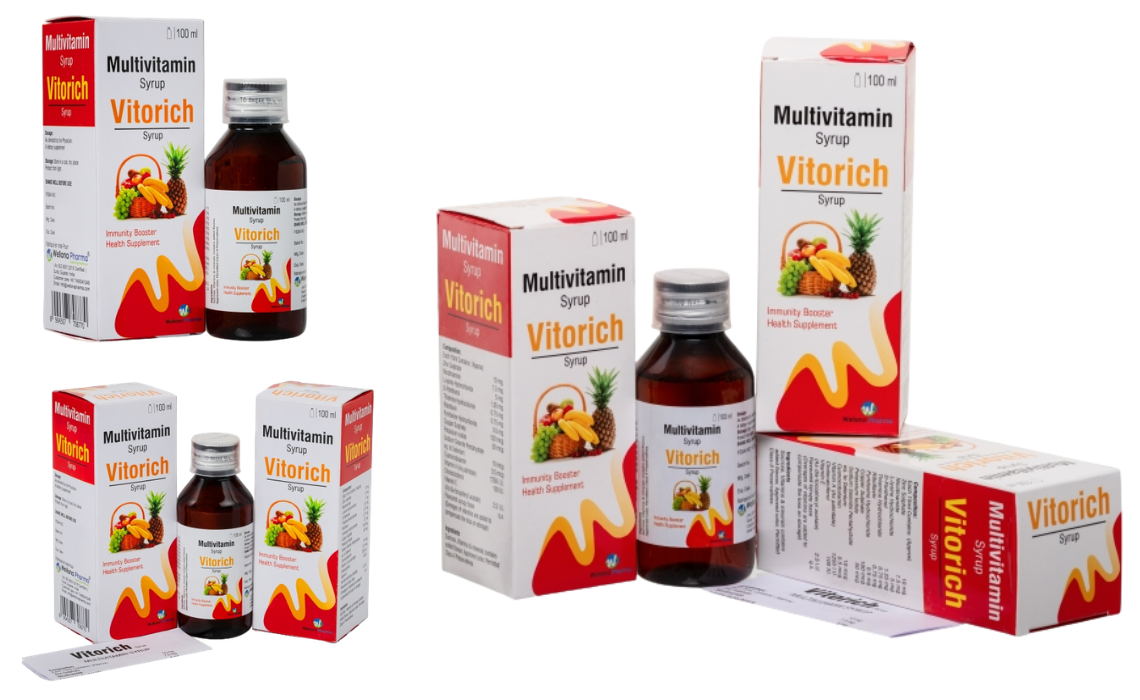
Multivitamin syrups combine selected vitamins in a liquid dosage form. Depending on the formulation, they may contain a selection of B-complex vitamins and other vitamins, with some products also including minerals. The exact ingredient combination and strength should always be confirmed against the approved product specification.
Pharmaceutical companies may consider multivitamin formulations when developing nutritional product ranges for particular age groups or consumer needs. However, products intended for children, adults or specific life stages may require different compositions, directions and labelling. A manufacturer should be able to clarify the available formulation details and the documentation supplied for the selected product.
A reliable Nutritional Syrup Manufacturer should help business buyers understand these product characteristics before they finalise purchasing or private-label arrangements. For brands developing a wider range, consistency between batches and clear product documentation are particularly important.
Iron is an essential mineral involved in the formation of haemoglobin, the red blood cell protein responsible for carrying oxygen. Iron-containing products may be considered in situations where supplementation is appropriate, but the need for iron and the correct amount depend on individual circumstances and professional guidance.
Iron syrups can be relevant to pharmaceutical portfolios serving markets where liquid iron formulations are requested. The formulation may use a suitable iron compound, and the quantity of elemental iron must be clearly understood. Different iron compounds do not necessarily provide the same amount of elemental iron by weight, so product specifications and labels must be reviewed carefully.
The NIH Office of Dietary Supplements iron fact sheet explains iron's role in the body and outlines commonly used forms of iron in supplements. It is a useful reference for pharmaceutical buyers researching the ingredient category.
Iron-containing products require careful handling and responsible communication because excessive iron intake can be harmful, particularly for children. Buyers should ensure that packaging, safety information and dosing instructions meet applicable requirements. Product selection and use should follow relevant medical advice and local regulations.
Calcium is an important mineral for bones and teeth and also supports normal muscle function, nerve transmission and other physiological processes. Calcium-containing syrups may be considered by pharmaceutical companies looking to offer liquid nutritional products. Depending on the product specification, a formulation may contain calcium alone or combine it with other nutrients, such as vitamin D, where available and appropriate.
The actual calcium content depends on the compound used and the formulation. Buyers should distinguish the quantity of the calcium compound from the amount of elemental calcium declared for the finished product. This distinction is important when comparing product specifications, reviewing labels and assessing whether a formulation meets a brand's requirements.
The NIH Office of Dietary Supplements provides additional information in its calcium fact sheet for health professionals, including common supplement forms and factors that affect calcium absorption.
As with other nutritional products, formulation decisions should be based on the intended use, applicable requirements and a review of the finished product specification. Buyers should not assume that every calcium syrup contains the same ingredients or nutrient levels.
Quality assurance is central to pharmaceutical manufacturing because it helps establish documented processes for producing products that meet defined specifications. When evaluating a nutritional syrup manufacturer, buyers should look beyond product descriptions and ask how raw materials, production processes, packaging and finished batches are controlled.
Depending on the product and applicable regulatory framework, relevant quality checks may include:
The exact tests required depend on the formulation, dosage form, intended market and applicable standards. Buyers can review Wellona Pharma's quality control and quality assurance information and quality policy, then contact the company to confirm the documentation and controls relevant to a particular product.
Packaging is an important consideration for liquid nutritional formulations. The selected container should be compatible with the product and suitable for its storage and distribution conditions. Buyers may need to consider bottle capacity, closure type, tamper-evident features, measuring accessories, transport protection and the packaging configuration required by their market.
Labelling requirements can differ between countries and according to whether a product is regulated as a medicine, dietary supplement or another product category. Before placing an order, buyers should confirm the applicable classification, permitted claims, ingredient declarations, language requirements, warnings, batch details, expiry information and storage instructions.
For export-oriented businesses, it is also important to confirm the documents required for import registration, customs clearance and local distribution. Requirements should be checked with the relevant regulatory authority or qualified regulatory adviser in each destination market. A manufacturer's ability to provide accurate product information and agreed documentation can help buyers plan these steps more effectively.
Third-party manufacturing can help pharmaceutical companies and brand owners source products without establishing their own liquid manufacturing facility. Depending on the agreed arrangement and the manufacturer's available capabilities, a business may explore existing formulations, product specifications, packaging options and other commercial requirements.
Before proceeding, buyers should discuss minimum order quantities, batch sizes, lead times, packaging availability, product documentation, quality responsibilities and the process for approving labels or artwork. They should also clarify which party is responsible for regulatory submissions, product claims and market-specific compliance.
Businesses interested in this approach can learn more about Wellona Pharma's third-party manufacturing services. For requirements that need a more tailored discussion, the company's contract manufacturing page provides another starting point. Specific formulation availability and commercial terms should be confirmed directly before finalising a project.
Selecting a supplier requires a balanced assessment of product suitability, quality systems, communication and commercial reliability. Pharmaceutical buyers can use the following checklist during supplier evaluation:
Taking these steps helps businesses compare potential partners using practical criteria rather than price alone. It also creates a clearer basis for discussing long-term supply arrangements.
A nutritional syrup manufacturer produces liquid formulations containing selected vitamins, minerals or combinations of nutrients. The available products and strengths vary by manufacturer, so buyers should confirm the current portfolio and specifications directly.
Common product groups include multivitamin syrups, iron syrups and calcium syrups. Some formulations may combine several nutrients, depending on availability, intended use and applicable regulatory requirements.
Buyers should review the complete ingredient list, nutrient quantities, target population, product stability, packaging, finished product specifications and required labelling. They should also confirm that the formulation is appropriate for the intended market.
Quality assurance supports documented manufacturing controls, consistent production and compliance with defined product specifications. Relevant testing and documentation should be confirmed according to the formulation and applicable requirements.
Third-party manufacturing may be an option for brands that want to source products from an external manufacturer. Availability depends on the manufacturer's capabilities, the requested formulation, order quantity and agreed commercial and regulatory conditions.
Depending on the product and destination market, buyers may need product specifications, applicable test reports, batch documentation, stability information, ingredient details and regulatory documents. The exact requirements should be agreed before production or shipment.
No. Formulations can differ significantly in their ingredients and nutrient quantities. Buyers should check the specific product label and technical specification rather than relying on the general product category alone.
Choosing the right Nutritional Syrup Manufacturer requires careful consideration of formulation requirements, product quality, packaging, documentation and supply expectations. Whether your business is exploring multivitamin, iron or calcium syrups, a clear product specification and an informed supplier evaluation can help establish a more reliable sourcing process.
Wellona Pharma, based in Surat, Gujarat, India, works with pharmaceutical product categories and manufacturing enquiries. Explore the syrup portfolio and vitamin supplement category, or contact the team to discuss your requirements, current product availability and relevant manufacturing options.
Looking for a nutritional syrup supplier for your pharmaceutical business? Contact Wellona Pharma to enquire about product specifications, quality documentation, third-party manufacturing and supply requirements for your target market.