
- E-mail : info@wellonapharma.com
- Call : +91-261-2571244
- Mob: +91-7490041245

Pediatric medicines require careful consideration of formulation, quality, packaging and supply requirements. For pharmaceutical companies serving children's healthcare markets, antibiotic dry syrups are an important product category that calls for dependable manufacturing processes and consistent product quality. Choosing the right Pediatric Antibiotic Dry Syrup Manufacturer can help pharmaceutical brands, distributors, importers and healthcare product suppliers build a reliable portfolio for their target markets.
Antibiotic dry syrups are generally supplied as powders or granules that are reconstituted with a specified liquid before use. This dosage form can be useful when an oral liquid is preferred or when a product's stability requirements support a dry formulation. Depending on the product portfolio and applicable market requirements, the category may include formulations containing amoxicillin, amoxicillin-clavulanate, azithromycin, cefixime and cephalexin.
For B2B buyers, selecting a supplier involves more than comparing prices. Product availability, manufacturing capabilities, documentation, quality systems, packaging options and export requirements all need attention. Wellona Pharma, based in Surat, India, offers pharmaceutical formulations across several dosage forms, including dry syrups. Businesses can explore its syrup product category and discuss relevant requirements with its team.
Dry syrups are oral formulations manufactured in a dry form and reconstituted according to the approved product instructions. They are developed to provide a practical dosage form for medicines that are not necessarily supplied as ready-to-use liquids. The final product must be prepared, stored and used in accordance with its approved label and instructions.
In pediatric healthcare, the suitability of an antibiotic depends on the diagnosed infection, the patient's age and weight, clinical guidance, allergy history, local resistance patterns and other patient-specific factors. A formulation's availability does not mean it is appropriate for every child or infection. Antibiotics should be prescribed and used under the direction of a qualified healthcare professional.
For pharmaceutical businesses, the product category offers an opportunity to serve different market requirements through appropriately selected formulations. However, buyers should confirm the precise composition, strength, pack size, registration status and availability of every product before making commercial commitments.
A pediatric antibiotic portfolio may include several active ingredients and combinations. The exact range depends on a manufacturer's product portfolio, regulatory approvals and the requirements of the destination market.
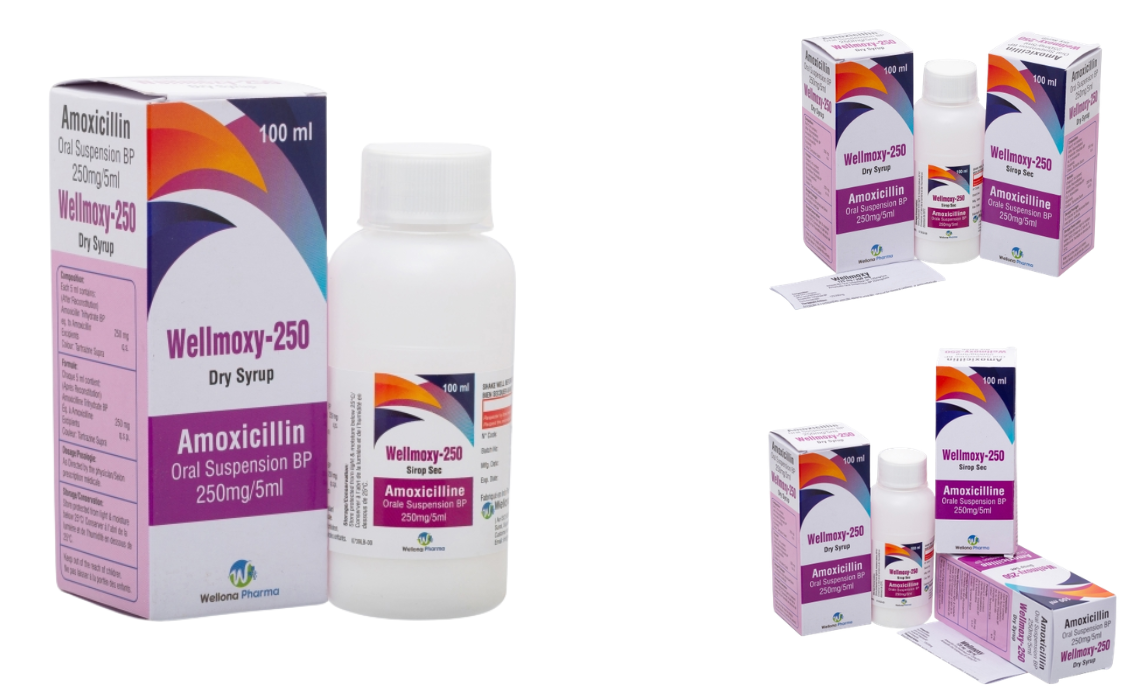
Amoxicillin is a penicillin-class antibiotic used for certain bacterial infections when clinically indicated. It is an established formulation category in pediatric medicine, although suitability depends on the infection being treated and the prescriber's assessment.
For buyers sourcing amoxicillin dry syrup, important considerations include the approved strength, presentation, packaging configuration, product documentation and target-market requirements. Pharmaceutical businesses can review Wellona Pharma's product gallery to explore listed formulations and contact the company to confirm current availability and specifications.
Amoxicillin-clavulanate combines an antibiotic with clavulanate, which inhibits certain bacterial beta-lactamase enzymes. The combination is used for selected bacterial infections when supported by clinical guidance. It is not interchangeable with amoxicillin alone, and the products may have different approved indications, strengths and instructions.
B2B buyers should verify the exact ingredient ratio, approved presentation, labeling requirements and stability information for any proposed combination. Availability should be confirmed directly with the manufacturer rather than assumed from the general product category.
Azithromycin belongs to the macrolide class of antibiotics. It may be prescribed for specific bacterial infections, depending on the clinical situation and applicable treatment guidance. Resistance patterns can affect whether this medicine is an appropriate choice.
When assessing an azithromycin formulation for procurement, buyers should verify the approved strength, pack configuration, product specifications and registration requirements in the intended market. Antibiotic selection must remain a clinical decision, not simply a result of product availability.
Cefixime is a cephalosporin antibiotic used for selected bacterial infections. The suitability of cefixime depends on the diagnosis, local guidance, susceptibility information and patient-specific factors. Buyers should review the precise formulation and its approved product information before considering procurement.
For importers and distributors, checking documentation, labeling, packaging and the applicable regulatory pathway is particularly important when introducing a product into a new market.
Cephalexin is another cephalosporin antibiotic that may be used for certain bacterial infections when clinically appropriate. As with other antibiotics, its use should follow an appropriate diagnosis and professional prescribing guidance.
Procurement teams should confirm whether the required cephalexin formulation is available, along with its approved strength, packaging, shelf-life information and supporting documentation. Product-specific confirmation is essential before adding it to a supply agreement.
These examples describe the wider category and should not be interpreted as confirmation that every formulation, strength or combination is currently available from a particular supplier. Buyers should request a current product list and verify specifications before placing an order.
Choosing a pediatric antibiotic dry syrup supplier is a strategic sourcing decision. A structured evaluation helps businesses assess whether a prospective manufacturing partner can support their commercial and regulatory needs.
Start by confirming the manufacturer's experience and capabilities in the relevant dosage form. Ask which antibiotic dry syrups are available, whether the required strengths and pack sizes can be supplied, and what minimum order quantities or production lead times apply. Any customized or additional product requirement should be assessed individually.
Wellona Pharma describes its pharmaceutical manufacturing activities and dry syrup capabilities on its contract manufacturing page. Prospective customers can use this information as a starting point and contact the company to discuss product-specific requirements.
Quality is central to pharmaceutical sourcing. Buyers should understand how a manufacturer manages incoming materials, production controls, testing, batch documentation, finished-product release and complaint handling. The appropriate checks and specifications depend on the formulation and the applicable regulatory requirements.
Useful questions include whether the required product documentation is available, how batch traceability is maintained, and which quality records can be supplied to the customer. Buyers should independently verify relevant licences, certifications and approvals for the facility and product rather than relying on general marketing statements.
For additional information about the company's stated quality approach, visit the Wellona Pharma quality policy.
Packaging must be suitable for the formulation and comply with the requirements of the destination market. For dry syrups, buyers should confirm the approved container, closure system, pack size, labeling details and instructions for reconstitution. Any measuring device, insert or other pack component should also be verified against the approved product presentation.
Documentation requirements may include product specifications, certificates of analysis, stability information, manufacturing records and other documents required by the relevant authorities or customer quality agreement. The exact documentation package varies by product and jurisdiction.
Requirements for pharmaceutical products vary between countries. A formulation that can be supplied in one market may require additional registration, labeling changes or other regulatory steps before it can be marketed elsewhere.
Importers should establish which party is responsible for registration, product submissions, local representation, import permits and ongoing compliance. They should also verify whether the proposed product and manufacturing site meet the requirements of the destination market. A manufacturer's general export experience should not be treated as automatic approval for every product in every country.
Antibiotic resistance is an important consideration for manufacturers, distributors and healthcare providers. Unnecessary or inappropriate antibiotic use can contribute to resistance, reducing the effectiveness of treatments over time. The Centers for Disease Control and Prevention's guidance on pediatric outpatient care emphasizes appropriate antibiotic prescribing and explains that antibiotics are not useful for common viral illnesses such as uncomplicated colds.
Pharmaceutical businesses can support responsible use by ensuring that product information is accurate, approved labeling is followed and promotional materials remain consistent with authorized indications. Commercial communication should never encourage unnecessary antibiotic use or imply that an antibiotic is suitable for every childhood infection.
Manufacturers and distributors also need to consider applicable requirements for storage, transportation, product traceability and handling of quality complaints. These practices support responsible supply throughout the product lifecycle.
Third-party manufacturing can help pharmaceutical companies source products without establishing every manufacturing capability in-house. Depending on the agreement and the manufacturer's capabilities, this model may support product sourcing, production planning, packaging coordination and supply for an established brand or distribution network.
Before entering into an arrangement, buyers should agree on the product specification, approved labeling, order quantities, quality responsibilities, documentation, delivery timelines and commercial terms. They should also clarify how changes to the product, manufacturing process or packaging will be reviewed and approved.
Companies exploring this model can learn more about Wellona Pharma's third-party manufacturing services. The next step is to share the required formulation and market details so that product availability, feasibility and applicable requirements can be assessed directly.
A dependable sourcing strategy begins with a clear product brief. Buyers should identify the active ingredient, required strength, dosage form, pack size, target country, expected order volume and required delivery schedule. This makes it easier to evaluate whether a proposed supplier can meet the actual requirement.
It is also useful to establish a process for checking product availability before each order, reviewing documentation, monitoring delivery performance and addressing quality concerns. Where multiple products are being sourced, a consolidated product list can help the procurement team track specifications and pending confirmations.
Price is one part of the decision, but the lowest quotation may not represent the best overall value if documentation, regulatory readiness, packaging or supply reliability do not meet the buyer's needs. Comparing suppliers against a consistent checklist helps procurement teams make more informed decisions.
A pediatric antibiotic dry syrup is a dry oral formulation intended to be reconstituted according to its approved instructions. It contains an antibiotic for use in selected bacterial infections when prescribed by a qualified healthcare professional.
Depending on the manufacturer and market, the category may include amoxicillin, amoxicillin-clavulanate, azithromycin, cefixime and cephalexin formulations. Buyers should confirm current product availability, strengths and approved presentations directly with the supplier.
Review manufacturing capabilities, applicable licences and certifications, quality systems, product specifications, documentation, packaging, regulatory requirements and supply terms. Verify claims and product approvals before finalizing a sourcing agreement.
Yes. Interested companies can share their required formulation, strength, pack size, target market and estimated quantity to discuss feasibility, availability and commercial terms with a prospective manufacturing partner.
Importers should verify product registration requirements, labeling, documentation, batch-release information, storage conditions, shelf life, packaging and import permissions for the destination market. Requirements vary by country and product.
No. The appropriate antibiotic depends on the diagnosis, patient-specific factors and clinical guidance. Antibiotics should be used only when prescribed and should not be used to treat viral infections unless a separate bacterial infection warrants treatment.
For pharmaceutical importers, distributors, wholesalers and brand owners, selecting a suitable pediatric antibiotic dry syrup supplier requires careful evaluation of product availability, manufacturing capability, quality documentation and destination-market requirements.
Wellona Pharma is a pharmaceutical manufacturer and exporter based in Surat, Gujarat, India, with a portfolio spanning multiple dosage forms. Businesses interested in antibiotic dry syrups can explore the antibiotic product category and the syrup range, then contact the company to confirm the specific formulations and commercial requirements relevant to their market.
Looking for a pediatric antibiotic dry syrup manufacturing or supply partner? Visit the Wellona Pharma contact page to submit your enquiry. Include the required product, strength, pack size, target country and estimated quantity to help the team assess your request.