
- E-mail : info@wellonapharma.com
- Call : +91-261-2571244
- Mob: +91-7490041245

Pediatric medicines require careful attention to formulation, dosage accuracy, packaging and quality because they are intended for use in infants and children. For pharmaceutical companies, distributors, wholesalers and brand owners, selecting a dependable Pediatric Drops Manufacturer is an important step in developing a reliable product portfolio. Liquid drops can offer a practical dosage form for selected medicines and nutritional products when the formulation is appropriate for the intended age group and approved use.
Demand for child-friendly pharmaceutical formulations makes it important for buyers to assess more than product availability. Ingredient specifications, concentration, stability, measuring accuracy, packaging and regulatory documentation all influence whether a product is suitable for a particular market. Pharmaceutical companies should work with manufacturers that can provide clear product information and discuss the requirements of the intended formulation.
Wellona Pharma, based in Surat, Gujarat, India, manufactures and exports pharmaceutical formulations across multiple dosage forms, including drops, syrups, suspensions and other products. Businesses can explore the company's drops category and syrup category to review relevant product areas and enquire about current availability.
Pediatric drops are liquid formulations intended to deliver a measured quantity of a medicine or nutrient. Depending on the product, they may be administered orally or used for another approved route, such as ophthalmic or otic administration. These dosage forms are not interchangeable: oral drops, eye drops and ear drops have different formulation, manufacturing, packaging and safety requirements.
For this reason, pharmaceutical buyers should specify the intended route of administration when requesting product information. They should also confirm the active ingredient, concentration, intended patient group, approved indication and relevant product specifications before evaluating a supplier.
Oral drops may be considered for products where small measured volumes are appropriate. However, a drop-based dose can vary with the dispensing device and formulation characteristics. Product development and packaging therefore need to support accurate and consistent administration according to the approved instructions.
The World Health Organization provides guidance on the development of child-friendly medicines and age-appropriate formulations. Its resource on paediatric quality product profile assessment offers a useful framework for considering whether a medicine's formulation is suitable for its intended paediatric population.
The appropriate portfolio depends on the manufacturer's available formulations, the target market and the applicable regulatory approvals. Rather than assuming that every product is available from every supplier, buyers should request an updated product list and confirm the technical details of each formulation.
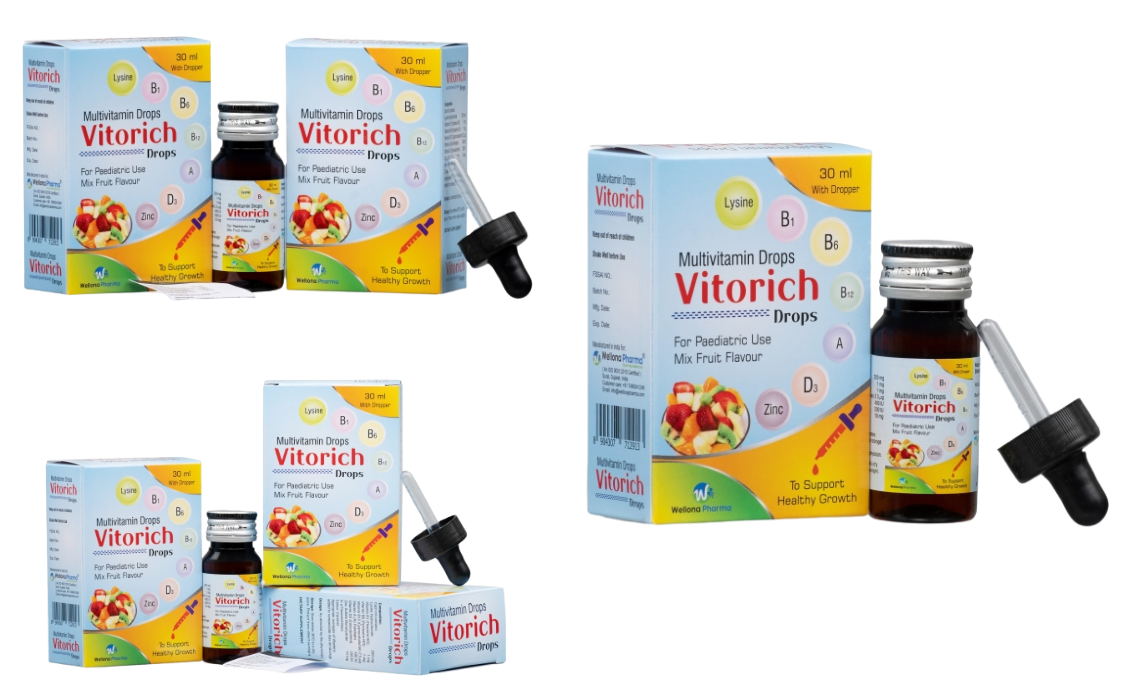
Vitamin and nutritional drops may be considered for product portfolios serving specific nutritional needs. Depending on the formulation, these products can contain selected vitamins or combinations of nutrients. Buyers should verify the composition, concentration per measured dose, intended age group, storage instructions and approved label claims.
Where a product contains several nutrients, the compatibility and stability of the ingredients are important considerations. Packaging and dispensing instructions should also make the intended serving clear. Nutritional products should not be marketed as treating or preventing a medical condition unless the relevant claims are permitted and supported under applicable regulations.
Oral medicinal drops may be used for certain medicines where a liquid formulation is suitable. The active ingredient, concentration and intended use vary by product, so buyers should assess each formulation individually. Particular attention should be given to dose-measurement instructions, contraindications, storage conditions and packaging compatibility.
Pharmaceutical companies should confirm whether the requested product is intended for infants, older children or another patient group. The suitability of a formulation and its dose must be determined through approved product information and qualified healthcare guidance, not simply by selecting a smaller quantity of an adult product.
Eye and ear drops are distinct dosage forms with route-specific manufacturing and quality requirements. Ophthalmic products generally require appropriate sterile manufacturing controls, while otic formulations must meet the specifications applicable to their ingredients and intended use. Buyers should clearly distinguish these products from oral pediatric drops when preparing a sourcing enquiry.
For either category, review the approved route, composition, container design, closure system, storage conditions and product-specific quality documentation. The supplier should confirm the exact dosage form and relevant manufacturing capabilities before commercial terms are discussed.
Quality assurance is central to pediatric pharmaceutical manufacturing. Because these products are intended for children, the formulation and its administration system should be evaluated carefully to support the product's approved specifications and instructions.
Depending on the dosage form and applicable standards, relevant quality checks may include:
The specific tests depend on the formulation, intended route, manufacturing process and destination-market requirements. Buyers should request the relevant product specifications and available quality documentation rather than relying only on broad statements about manufacturing standards.
Wellona Pharma provides information about its quality control and quality assurance approach. Pharmaceutical companies can review this information and contact the company to discuss the quality documentation applicable to their requested product.
Packaging is an important part of pediatric drops manufacturing because the container and dispensing mechanism affect how the product is stored and measured. Depending on the formulation, packaging may include a dropper, calibrated oral syringe or another suitable delivery device. The selected device should match the product instructions and support accurate administration of the intended volume.
Before selecting a supplier, buyers should evaluate:
The US Food and Drug Administration explains the importance of suitable measuring devices for liquid medicines. Its guidance on dosage delivery devices for oral liquid medicines discusses the risks created by inconsistent measuring marks and unclear dosing instructions.
For manufacturers and brand owners, packaging should be assessed as part of the complete product rather than treated as a separate purchasing decision. Label instructions, measuring devices and the dispensing container should work together to support the approved method of use.
Regulatory requirements for pediatric drops vary by country, product classification and route of administration. Pharmaceutical companies planning to import or distribute a product should verify the registration pathway, labelling requirements, permitted claims and documentation required in each destination market.
Depending on the product and jurisdiction, buyers may need access to product specifications, ingredient details, applicable test reports, stability information, batch records and other regulatory documents. Sterile products may have additional requirements relevant to their manufacturing and quality controls.
When sourcing products internationally, buyers should establish which documents are available, which documents must be prepared for registration and which responsibilities remain with the importer or local marketing authorisation holder. This discussion should take place before the product launch or purchase order is finalised.
Clear documentation also helps ensure that the formulation supplied matches the approved product description. Any proposed change to ingredients, strength, container or label should be reviewed through the appropriate quality and regulatory procedures.
Contract manufacturing can help pharmaceutical companies develop or expand their portfolios through an external manufacturing partner. It may be suitable for brand owners and distributors that want to source an existing formulation or discuss a product requirement without setting up their own manufacturing facility.
Before proceeding, companies should confirm whether the required pediatric drops are within the manufacturer's capabilities and whether the formulation can be supplied for the intended market. Availability will depend on the active ingredient, dosage form, technical requirements, regulatory status and commercial arrangements.
Important points to agree include:
Businesses can learn more about Wellona Pharma's contract manufacturing services and discuss whether their requirements can be accommodated. Product availability, customisation options and commercial terms should be confirmed directly with the company.
Selecting a supplier requires a structured assessment of technical, quality and commercial factors. The following checklist can help pharmaceutical buyers compare potential manufacturing partners.
A well-defined evaluation process helps buyers assess suppliers on more than price alone. It also provides a stronger foundation for product quality, regulatory planning and long-term supply relationships.
A pediatric drops manufacturer produces liquid formulations intended for use in children. Depending on the manufacturer's capabilities and product approvals, the portfolio may include oral medicinal drops, vitamin drops, eye drops or ear drops. These categories have different formulation and quality requirements.
Potential product groups include vitamin and nutritional drops, selected oral medicines and other approved drop formulations. Buyers should request the current product list and confirm the availability, strength and regulatory status of each product.
Relevant checks may include ingredient verification, assay, stability, microbiological quality, container compatibility and dispensing performance. Sterility requirements apply where relevant to the specific dosage form, such as ophthalmic products.
Suitable packaging helps protect product quality and supports accurate dispensing. The container, closure and measuring device should be compatible with the formulation and consistent with the approved label instructions.
Contract manufacturing may be an option if the requested formulation is within the manufacturer's capabilities and meets the relevant regulatory requirements. Product availability, minimum order quantities, documentation and commercial terms should be confirmed directly.
Buyers should review product specifications, available quality documentation, product registration requirements, labelling, packaging, storage conditions and applicable import permissions for the destination market.
Choosing the right Pediatric Drops Manufacturer involves evaluating formulation suitability, quality controls, packaging, documentation and supply capabilities. Pharmaceutical companies should confirm the exact product requirements and current availability before placing an order or planning a launch in a new market.
Wellona Pharma, based in Surat, Gujarat, India, offers pharmaceutical manufacturing and export services across a range of dosage forms. Explore the company's drops category, review its syrup portfolio, and discuss your requirements with the team.
Looking for a pediatric drops supplier or contract manufacturing partner? Contact Wellona Pharma to enquire about current product availability, technical specifications, quality documentation and manufacturing options for your pharmaceutical business.